Accident Recovery & Winching
Expert vehicle recovery for accidents, rollovers, and off-road situations.
What is Accident Recovery and Winching
Accident recovery and winching are specialized towing services for vehicles that are stuck, overturned, or in difficult positions after an accident. Unlike standard towing where the vehicle is accessible and can be easily loaded, accident recovery often requires heavy equipment, winches, and advanced techniques to safely extract and transport the vehicle. This service is critical when a car goes off the road, ends up in a ditch, flips over, or becomes trapped in a position where traditional towing methods will not work.
At GateRoad Doral Towing, we have the equipment and training to handle complex recovery situations. Our trucks are equipped with powerful winches, chains, straps, and rigging equipment that can pull vehicles from almost any position. We also work closely with law enforcement, insurance companies, and other emergency responders to coordinate safe and efficient recoveries. Whether your car rolled down an embankment, crashed into a barrier, or is stuck in mud or sand, we can get it out safely.
Winching is the process of using a cable or strap attached to a motorized drum to pull a vehicle. Our winches can exert thousands of pounds of pulling force, which allows us to move even heavy vehicles that are stuck or immobilized. We use winching not just for accidents, but also for vehicles that are stuck in off-road conditions, parking garages, or other challenging locations. The key to safe winching is proper rigging and understanding the physics of the pull. Our operators are trained to assess each situation and choose the safest anchor points and pulling angles.
When You Need Accident Recovery
Accident recovery becomes necessary in situations where a vehicle cannot be driven or easily accessed. Here are the most common scenarios where you would need this service:
Common Accident Recovery Situations:
- Off-Road Accidents: Your vehicle left the roadway and is now in a ditch, down an embankment, or stuck in vegetation. Standard tow trucks cannot reach these locations without winching equipment.
- Rollover Accidents: If your car flipped over onto its side or roof, it must be carefully uprighted before it can be towed. This requires winches and proper techniques to avoid further damage.
- Multi-Vehicle Collisions: In accidents involving multiple cars, vehicles may be tangled together or blocking each other. We separate and recover each vehicle safely.
- Guardrail and Barrier Crashes: Vehicles that crash into guardrails, concrete barriers, or other obstacles often become stuck or pinned. We use winches to free them without causing additional damage.
- Water and Mud: Cars that drive into water, ponds, or muddy areas sink and become stuck. Winching is required to pull them out without getting our equipment stuck as well.
- Parking Structure Incidents: Vehicles that crash in parking garages or get stuck on ramps need specialized recovery because of tight spaces and limited access.
- Mechanical Failures on Slopes: If your car breaks down on a steep hill or incline and cannot be moved safely, we use winches to control the descent or pull it to level ground.
Accident recovery is also necessary when a vehicle is severely damaged and cannot roll or steer. If the wheels are locked, the steering is broken, or the frame is bent, traditional towing will not work. We use dollies, winches, and specialized rigging to load these vehicles onto our flatbed trucks without dragging them or causing more damage. This protects your vehicle and ensures it can be properly assessed and repaired.
In Florida, weather events like heavy rain and flooding can cause vehicles to become stuck or submerged. We provide recovery services after storms to help get cars out of flooded areas. If you need emergency towing after an accident or emergency situation, we respond quickly to get your vehicle to safety.
Our Recovery Process
Every accident recovery situation is unique, but we follow a systematic process to ensure safety and minimize damage to your vehicle. Here is how we handle complex recoveries:
Assessment
When we arrive on scene, our first step is to assess the situation. We look at the position of the vehicle, the terrain, any obstacles, and potential hazards. We identify the safest anchor points for winching and determine the best angle and method for extraction. If the vehicle is on its side or upside down, we plan how to upright it without causing further damage. This assessment takes only a few minutes but is critical for a successful recovery.
Safety Setup
Before we start winching, we set up safety measures. This includes positioning our truck in a stable location, setting up warning cones or flares if we are on a roadway, and making sure all bystanders are at a safe distance. We also check that our equipment is in good condition and properly rated for the weight and forces involved. Safety is our top priority in every recovery operation.
Rigging and Winching
We attach our winch cable or strap to solid points on your vehicle, usually the frame or tow hooks. We avoid attaching to body panels or bumpers that could tear off under load. Once rigged, we slowly engage the winch and pull your vehicle incrementally. We watch carefully for any shifting or unexpected movement and adjust as needed. If the terrain is soft or unstable, we use ground mats or other equipment to give our truck better traction.
Loading and Transport
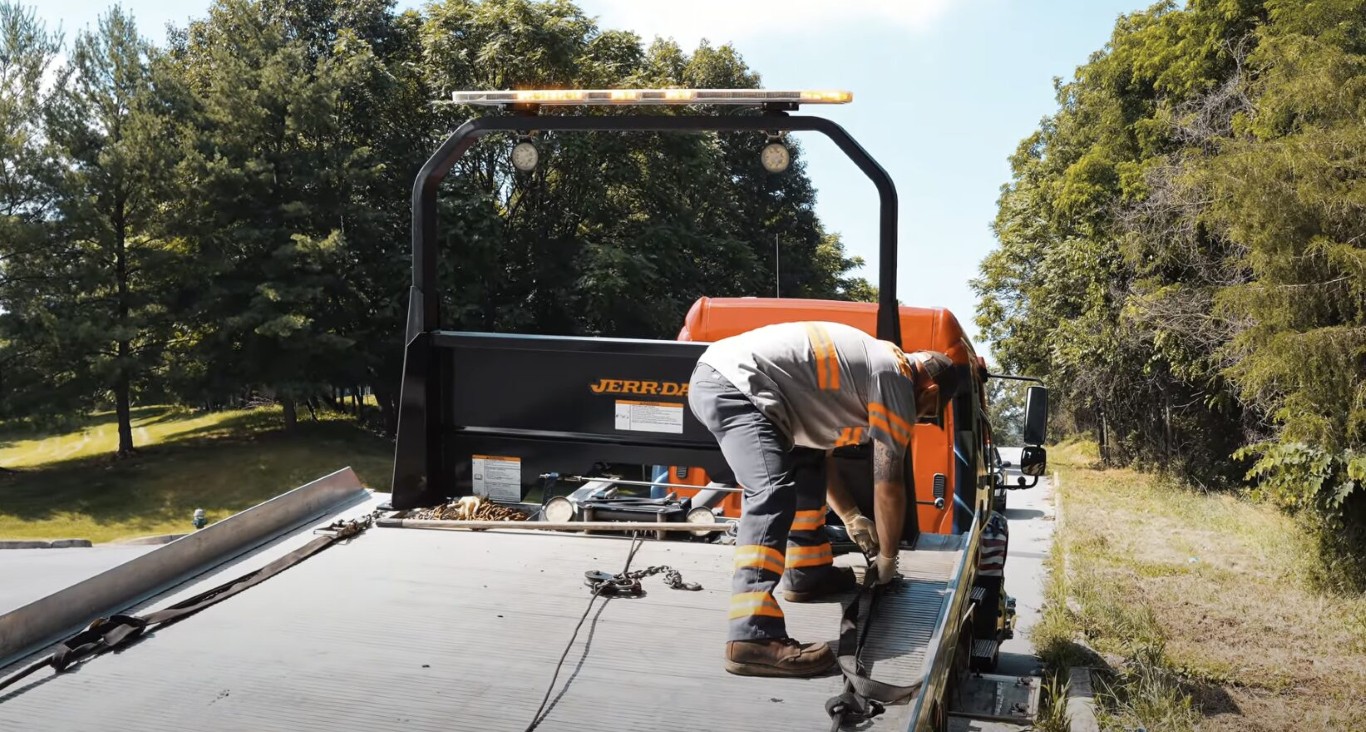
Once your vehicle is in an accessible position, we load it onto our flatbed truck using the same care as any other tow. We secure it with straps and chains to prevent movement during transport. If the vehicle is too damaged to roll, we use wheel dollies or slide it onto the bed. We then transport your car to your chosen destination, whether that is a repair shop, your insurance company's preferred facility, or a storage yard.
We also provide documentation and photos of the recovery process. This is important for insurance claims and helps show the condition of your vehicle before, during, and after recovery. If you need flatbed towing to a specific repair facility after recovery, we can arrange that as well.